

Scientific name
Cimex lectularius. They have been living alongside humans for thousands of years.
Size
Adults are about 4-5mm long, roughly the size of an apple seed. Nymphs are smaller and nearly translucent.
Life cycle
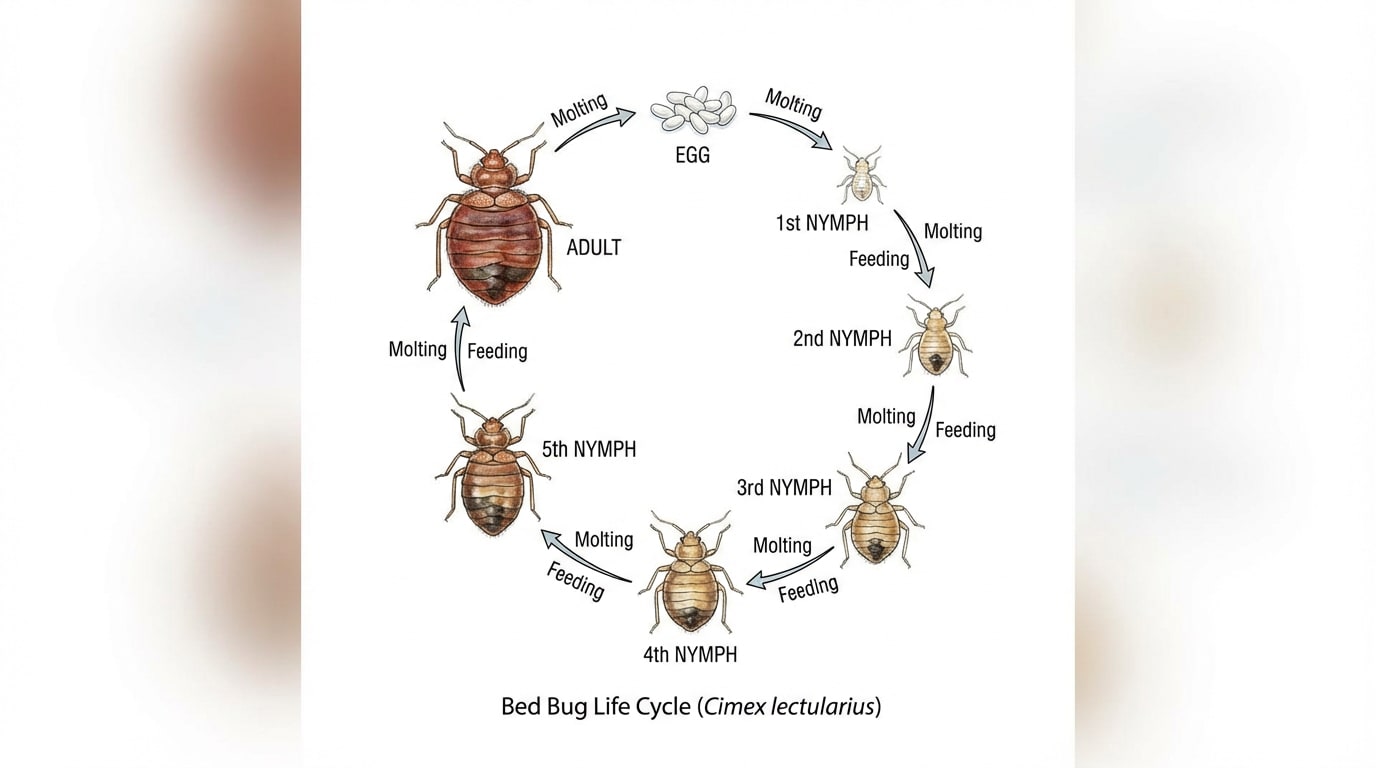
Egg to adult in about 5-7 weeks under ideal conditions. Females lay 1-5 eggs per day.
Feeding
They feed on blood, typically at night. A feeding takes 5-10 minutes. They can survive months without a meal.
Habitat
Mattress seams, headboards, baseboards, furniture joints, electrical outlets, and any dark crevice near where people sleep.
Detection
Look for fecal spots (dark ink-like stains), cast skins, eggs, and live bugs. Canine detection is the most reliable method.
Life cycle and reproduction
A single fertilized female can start an infestation. She lays 200-500 eggs in her lifetime. Eggs hatch in about 6-10 days. Nymphs must feed at each of five developmental stages before reaching adulthood.
This reproductive capacity is why early detection and prompt treatment matter so much. A small problem becomes a large one within weeks.
| Myth | Fact |
|---|---|
| Only dirty homes get bed bugs | Five-star hotels, hospitals, and dorms get them too. They follow people, not filth. |
| Throw everything away | Most belongings can be treated. Encasements protect mattresses. |
| Bug bombs work | Foggers scatter bed bugs deeper into walls and often make the problem worse. |
| They are too small to see | Adults are visible. Nymphs and eggs are harder to spot but detectable. |
| They only bite at night | They prefer darkness but will feed during the day if hungry enough. |
Treatment methods compared
There are several approaches to bed bug treatment. Chemical treatments with targeted insecticides are the most common. Heat treatments raise room temperatures to lethal levels. The right choice depends on the infestation severity, the type of space, and practical constraints.
We assess each situation individually and recommend the approach that gives the best chance of elimination.

Prevention tips
Reduce clutter near sleeping areas. Inspect seams and headboards regularly. Use protective encasements on mattresses and box springs. Be cautious with secondhand furniture. When traveling, inspect hotel beds and keep luggage off the floor. If you suspect activity, act quickly.
Monitoring and follow-up
After treatment, monitoring is essential. We use interceptor traps, visual inspections, and follow-up canine checks to confirm elimination. A second treatment is usually scheduled about two weeks after the first to catch any newly hatched nymphs.
We do not consider a case resolved until monitoring confirms no activity.
Request Help
Need expert help with bed bugs?
We provide honest assessments and practical plans. No upselling, no scare tactics.
Contact Us