

Different ants require different strategies
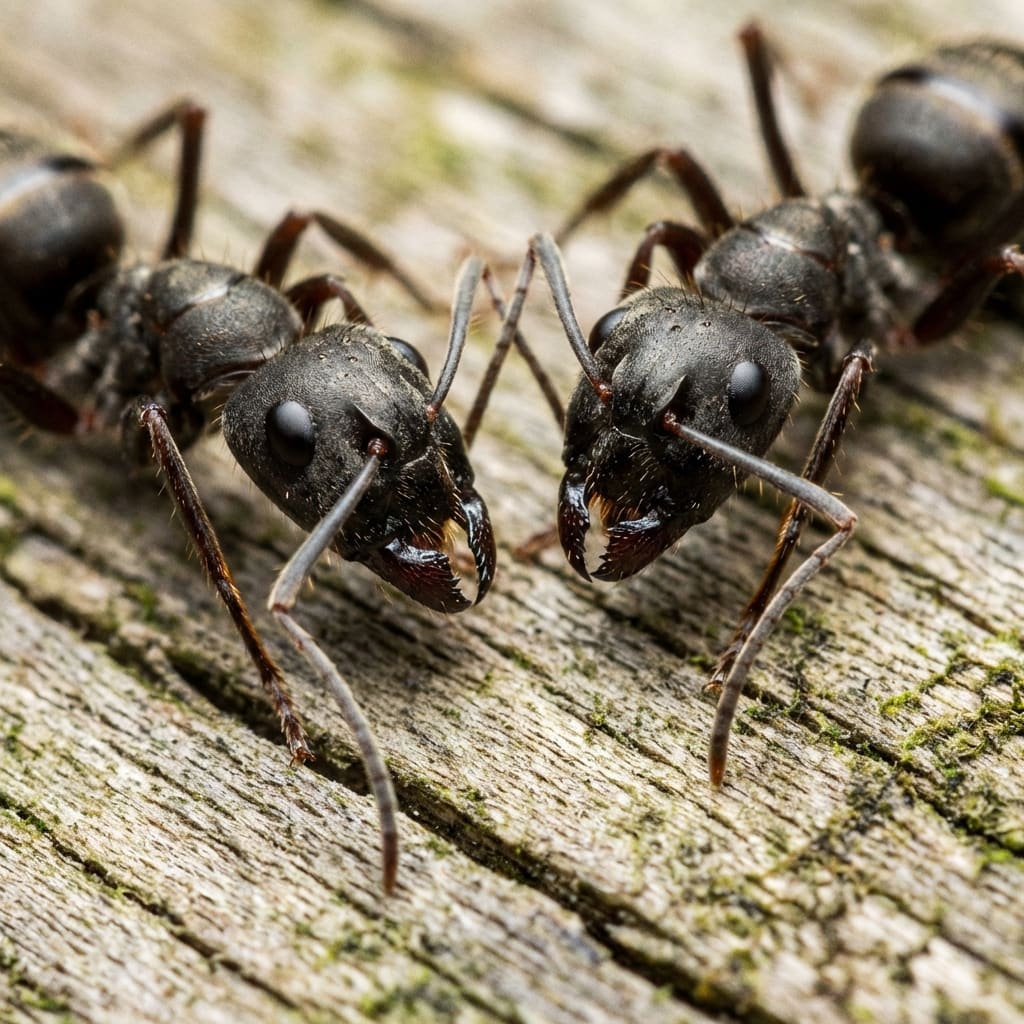
Odorous house ants, carpenter ants, and pharaoh ants behave differently and require different treatment approaches. Correct identification is the first step to effective control.
Spraying the ants you can see often makes things worse by fragmenting the colony and spreading them to new areas.
| Ant species | Where they nest | Risk level | Treatment approach |
|---|---|---|---|
| Odorous house ants | Wall voids, under floors, outside near foundation | Nuisance | Baiting along trails, exterior perimeter treatment |
| Carpenter ants | Moist wood, wall voids, tree stumps | Structural damage | Locate satellite colonies, targeted treatment, moisture repair |
| Pharaoh ants | Wall voids, behind outlets, near heat sources | Health (hospitals) | Specific baits only — sprays cause budding and spread |
| Pavement ants | Under slabs, driveways, sidewalk cracks | Nuisance | Exterior baiting and crack treatment |
Our treatment process
We inspect to identify the species, locate trails and entry points, then implement targeted control. Baiting is usually more effective than spraying because worker ants carry the bait back to the colony.
We also help you reduce food and moisture sources and seal common entry routes to prevent recolonization.
Contact Us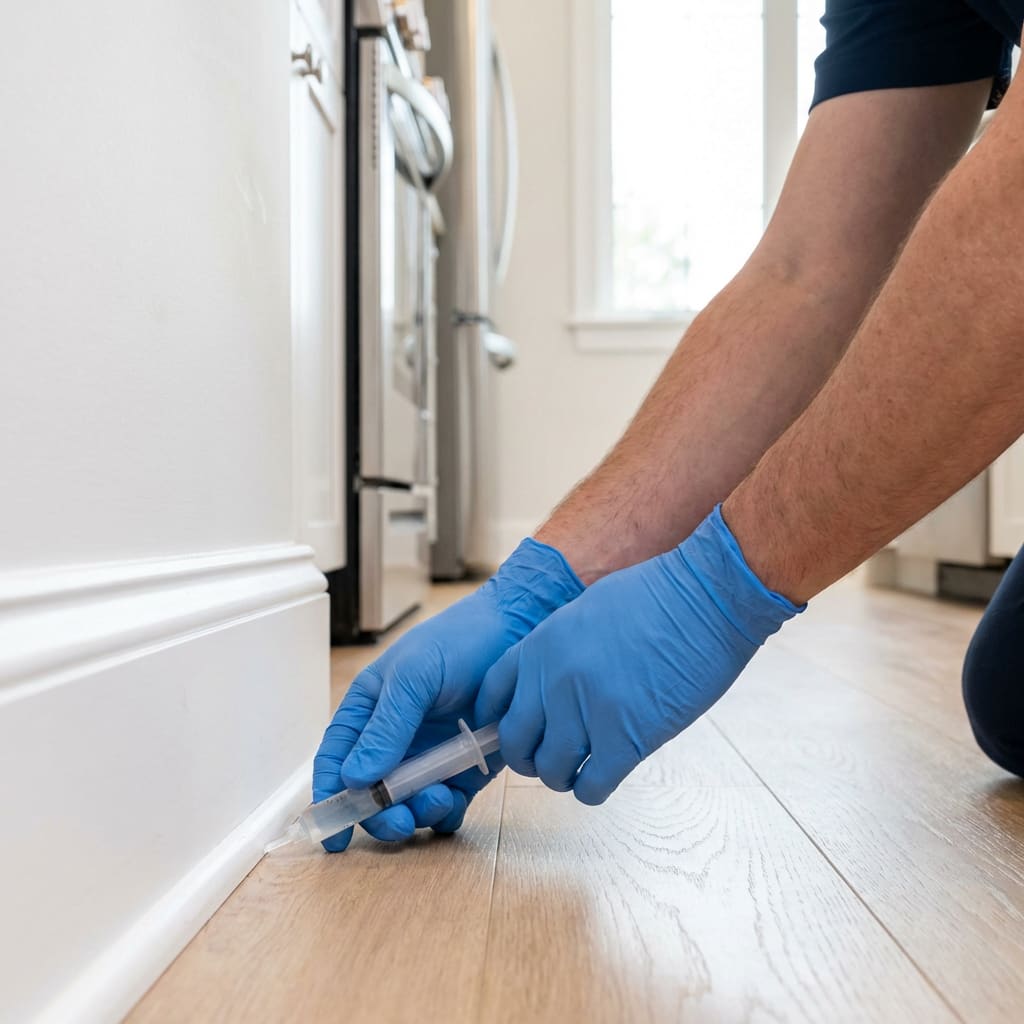
Carpenter ant damage
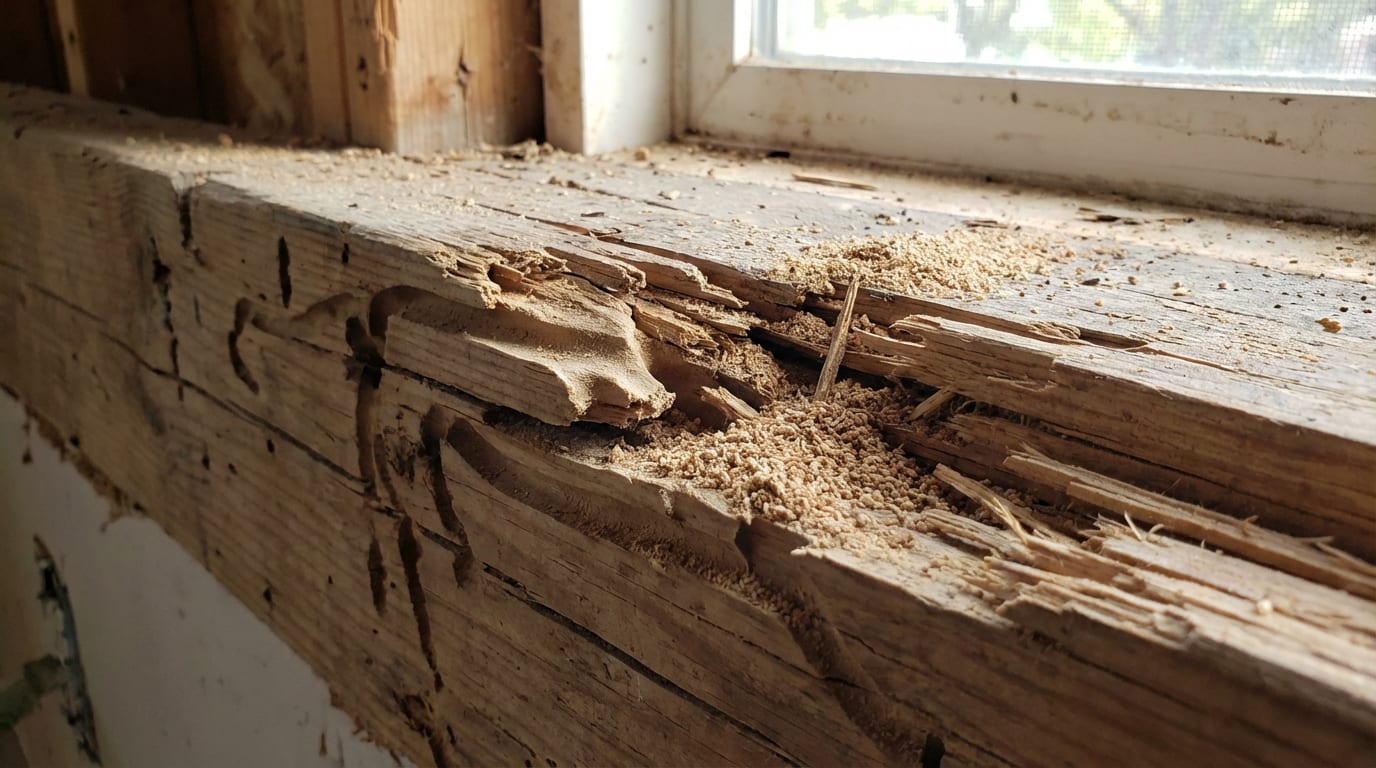
Carpenter ants do not eat wood, but they excavate it to build nests, creating smooth tunnels (galleries) in structural timbers. They prefer moist or damaged wood. Signs include sawdust-like frass near baseboards, windowsills, or in the basement.
If you suspect carpenter ants, addressing the moisture problem is as important as treating the colony.
Why do ants keep coming back?
Most ant treatments fail because they target individual ants instead of the colony. Over-the-counter sprays kill foragers but do not reach the queen. The colony replaces them and redirects trails. Effective control requires baiting systems that workers carry back to the nest.
Are the big black ants carpenter ants?
Large black ants are often carpenter ants, but not always. Size alone is not diagnostic. We look at body shape, antennae, and nesting behavior. Correct identification determines whether you have a structural pest or just a nuisance issue.
Do I need to tear out walls to treat ants?
Almost never. We use baiting systems and targeted applications that reach colonies inside walls without demolition. In rare cases of severe carpenter ant damage, we may recommend opening a small area for inspection and repair.
Long-term prevention
Control is faster and lasts longer when you reduce attractants: store food in sealed containers, address moisture problems (leaky pipes, condensation), seal cracks where trails form, and trim vegetation away from the foundation. We include prevention guidance with every service.
Ant problems in Philadelphia?
We identify the species, target the colony, and help you prevent recolonization. No guesswork.
Get a Quote